
Jumper's Knee
Jumper's Knee
With winter sports in full swing, we have been seeing more cases of knee injuries like “Jumper’s Knee” down at Monty Physio. This can be a frustrating condition for athletes or those doing regular physical activity. Luckily, a targeted, comprehensive approach to treatment can lead to great outcomes.
PATELLA TENDINOPATHY
Jumper's knee is a term used to describe patella tendinopathy, pain just below the kneecap
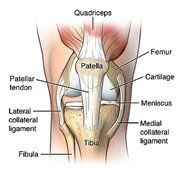
The patella tendon runs from your patella (kneecap) and attaches to the bony prominence around 5cm below the patella. It is a continuation and insertion point of the quadriceps (thigh) muscles.
WHAT HAPPENS IN TENDINOPATHY?
Tendons exist all throughout the body, and they join muscle to bone. They play a crucial role in energy storage and release when we use our muscles, which gives us the ability to move very efficiently. When a tendon (tendin-) becomes disordered or diseased (-opathy), there has been a mismatch between how much work the tendon can do, and how much we have asked it to do. In 'Jumper's knee', it is the patella tendon that is affected. It is not helpful to think of these injuries as "overuse" injuries, as this implies that doing a lot of activity is bad. Our tendons actually love doing work and getting loaded up. It is when our body is not able to adapt to the load we have placed on it that causes a problem.
WHY IS IT CALLED JUMPER'S KNEE?
The patella tendon play a key role in allowing us to jump and land. As the quadricep muscles contract, they help us to propel into the air. When we land, they also contract in order to assist in absorbing shock and transferring energy through the lower limb to the pelvis and trunk. The tendon plays a key role in this process of energy storage and release. This injury is common in sports that involve a lot of repetitive jumping like basketball, volleyball, netball or football.
CAUSES
The causes can be broken down into two categories. It is often not quite this simple, but this allows for a simpler explanation.
Intrinsic Factors - your body and what is unique to you.
We all have variations in the way we move. We may have areas of the body that are weak, tight, inflexible and so on. An action like jumping is not isolated to the knee. We have a foot, ankle, hip, pelvis, trunk (core) and upper body that all contribute to the action of jumping well. If there is a break down anywhere along this chain, structures such as our patella tendon may be asked to compensate and make up for this. Common problems I see related to patella tendinopathy is poor power and strength in the calf muscles, gluteals or core strength. Yes the quadriceps themselves may be at fault also, however it is common that there is a breakdown either below or above the injury site that leads to the overloaded patella tendon.
Extrinsic Factors
These are factors not related to your body specifically but can place excessive load on the patella tendon. This may include a change in activity or a sharp increase in activity. It could also be a change in footwear, or the surface that you're playing sport on
HOW TO TREAT AND MANAGE JUMPER'S KNEE
The list of intrinsic and extrinsic causes of patella tendinopathy can be long. That is why managing this injury is not a one size fits all approach. Management can require patience and a multifaceted approach.
Click below to find out what the best treatment options are for this injury
https://www.montyphysio.com.au/post/what-is-jumper-s-knee
If you have any questions or queries about about knee pain, or any other tendon related pain, get in touch today!
Pete Dal Lago
Physiotherapist
9424 8887