
How to wear a backpack correctly - For Adults and Children
How to wear a backpack correctly
- For Adults and Children
With the start of 2021 we saw the return to school and with it came returning to running around, making packed lunches, getting dressed and packing school bags.
Often these school bags are filled with all sorts of things from books, computers, lunch, drink bottles, hand sanitiser, hats, pencil cases and all the other accessories needed while at school.
This can build up to a lot of things in a single bag which your (or your child’s) body has to carry.
So when your child puts on their backpack what should you look at?
Shoulder straps
First of all ensure it has shoulder straps. No matter the fashion of over one shoulder or across the body a backpack with shoulder straps is the best way to share the load on both sides of your body. It also avoids the pulling action on one side of your body and the over correction of the other side.
Now while we're talking about straps - look for a backpack with wide padded straps to space the load over the shoulders. This may help avoid extra stress and irritation of structures such as nerves, blood vessels or certain muscles which can lead to symptoms into the arms and neck.
If you have extra bags for sports or after school activities and you are carrying the bag on one shoulder - try and spread the time carried on either shoulder and when you can (eg on the bus) put it on the ground.
Where the bag should sit along your back and hips
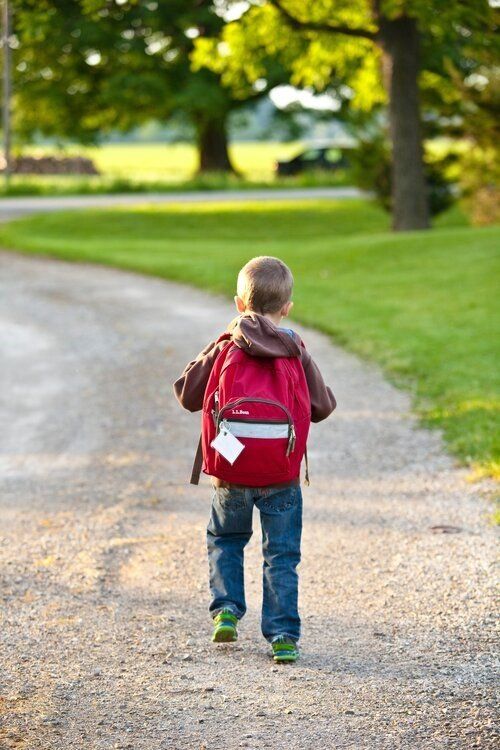
When wearing a backpack it should sit up towards your shoulders, and against the top of your back. It should not sit at your waist or on your hips. This can create a strong pull backwards which means your body leans forward to stop you falling backwards. Use the bag straps to fit the bag to your child as best as possible. Pull the shoulder straps tighter, if there is a waist belt use that to keep the bag close to your back.
If the bag is bumping against you as you walk or there is a large gap between the back and the bag then it’s too loose, adjust the shoulder straps.
Packing a school bag
Things to consider when packing the bag are what items are actually needed. Don’t carry around textbooks that you don't need. Store books and other school supplies in your locker. Even have a pencil case at school and at home. Today we are lucky that we use computers a lot and often textbooks are uploaded on the computer. But remember computers and their accessories can add weight.
Become smart about what items you need to take to and from home, consider what homework you have and what items you need and more importantly what items you can leave at school.
Pack the heavier items closer to the back of the bag and use the compartments to spread the load in the bag. And remember when you pick up your bag, it’s like picking up any weight, try to squat and bring it up to your shoulders.
The weight of a backpack should be around 10-15 % of your child’s weight. That means for a 40kg child the bag should not weigh more than 6kgs. If it does, consider some ways you can help reduce the weight in the bag and if not look at other ways such as using a trolley to carry the bag around or getting a bag with wheels. It is important to listen to our body and identify when something is contributing to pain and make adjustments. If you have any questions or concerns or your child is complaining of aches and pains through the neck, shoulders or back then speak to your GP or Osteopath.
You can call 0416 161 411 or book online at osteo4families.com.au with one of our Osteopaths who can do an assessment and give you some tips. Even bring in the school bag and we can help make some suggestions on ways to adapt it to your child’s body.
By Mariella Berry